
Chemical Wet Scrubber | Industrial Chemical Absorption System
$ 93.25
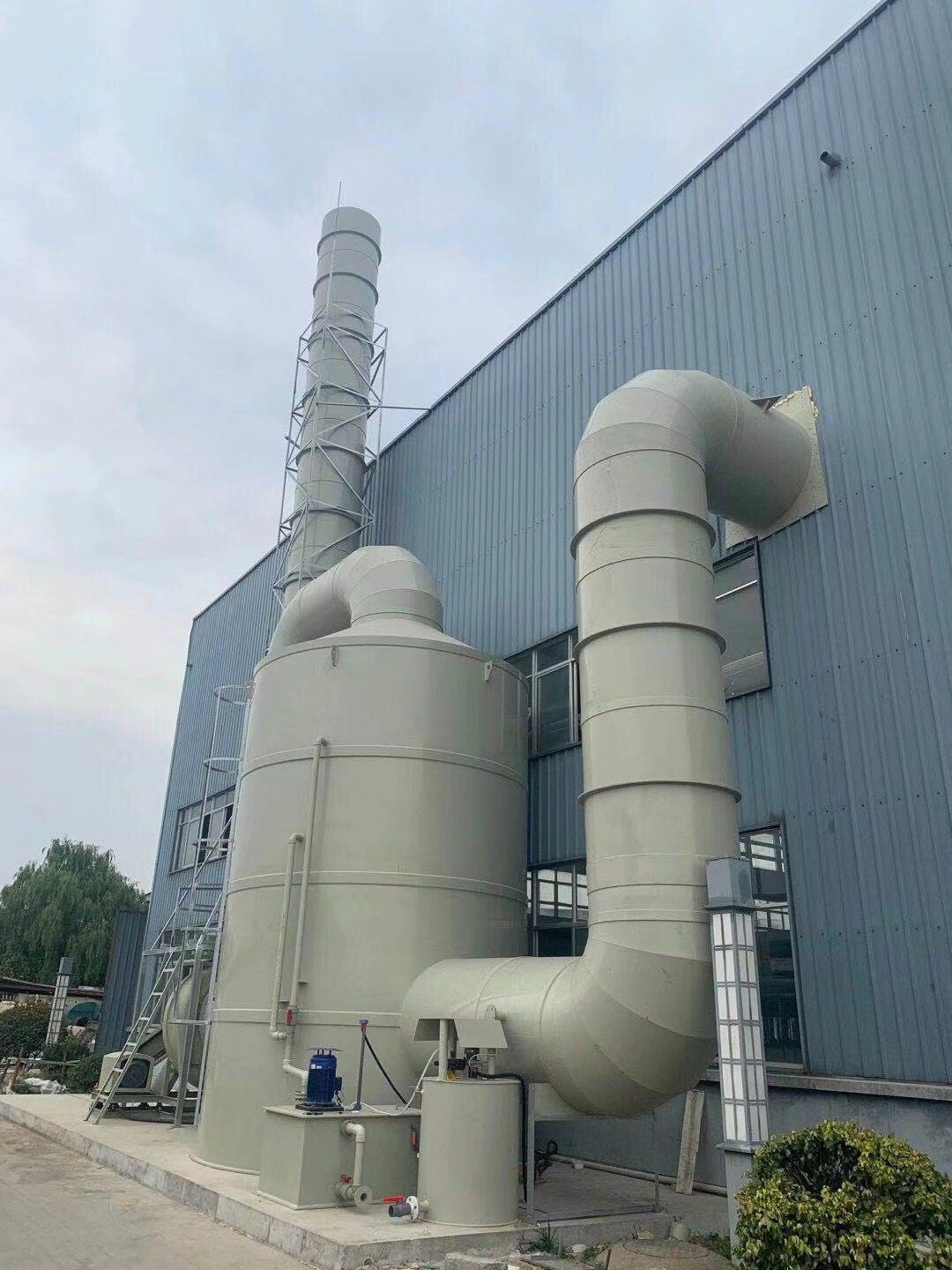
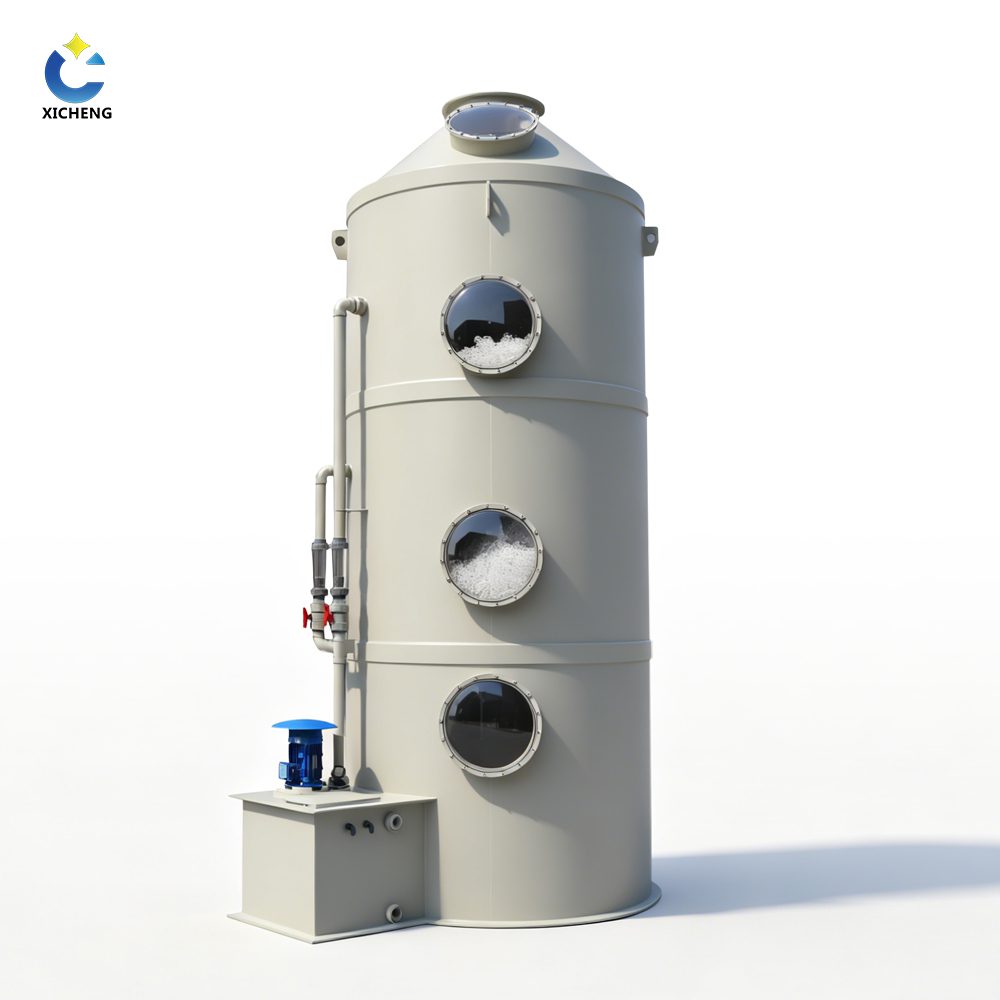
Table of Contents Toggle Product OverviewWhy Chemical Scrubbing vs Water-OnlyWhy XichengCore AdvantagesKey SpecificationsCertifications and ComplianceModel Selection TableGas Purification RateHow to OrderComplete Your SystemGlobal ShippingFAQWhat is the difference between a chemical scrubber and a standard wet scrubber?How do I know which reagent to use?What about the chemical waste produced?Learn More on Our Blog Product Overview Industrial chemical wet scrubber for process exhaust treatment where standard water scrubbing is insufficient. Uses chemical reagents (NaOH, H2SO4, NaOCl, KOH, Na2CO3) to neutralize, oxidize, or absorb target pollutants through controlled chemical reactions — not just physical dissolution. Designed for chemical manufacturing, pharmaceutical synthesis, petrochemical processing, and industrial operations generating reactive or hard-to-treat exhaust streams. Application Chemical process exhaust: acid gases, alkaline fumes, reactive compounds, odorous sulfur/nitrogen species Material Virgin PP (standard); FRP (solvent-containing exhaust); SS316L (high-temp aggressive chemistry) Scrubbing reagents NaOH, H2SO4, NaOCl, KOH, Na2CO3, H2O2 — matched to target pollutant chemistry Efficiency over 95% for most reactive gases; reagent-specific performance guarantees Air volume 100 – 150,000 m3/h single tower Lead time 15-25 days Warranty 12 months structure; chemical compatibility warranted per spec Why Chemical Scrubbing vs Water-Only Water scrubbing works for highly soluble gases like HCl and NH3 because they dissolve readily. But many industrial process emissions contain gases with low water solubility (H2S, mercaptans, NOx) or compounds that need chemical transformation, not just absorption. A chemical scrubber adds a reagent that reacts with the pollutant — converting it into a harmless, non-volatile compound that stays in the liquid phase: Acid gases (HCl, HF, SO2, H2S) NaOH → NaCl, NaF, Na2SO3, Na2S (dissolved salts removed via blowdown) Alkaline gases (NH3, amines) H2SO4 → (NH4)2SO4 (ammonium sulfate, stays dissolved) Oxidizable pollutants (H2S, mercaptans, sulfides) NaOCl → sulfates, elemental sulfur (oxidized and rendered odorless) Formaldehyde, phenols NaHSO3 or H2O2 → oxidized to harmless organics Chemical scrubbing achieves removal efficiencies that physical absorption alone cannot — especially for gases with low Henry’s law constants. The reagent is consumed in proportion to the pollutant loading and must be replenished; our automated pH/ORP-controlled dosing systems maintain optimal reagent concentration without manual intervention. Why Xicheng 16 years, 2600 systems shipped worldwide. Chemical scrubber design requires understanding both mass transfer and reaction kinetics — get the chemistry wrong and you have a vessel full of expensive liquid that isn’t scrubbing anything. We’ve designed chemical scrubbers for over 40 different gas-reagent combinations: Chemistry-first design. Before sizing the tower, we confirm the reaction stoichiometry, kinetics, and byproduct management. NaOH HCl is fast and straightforward. NaOCl H2S requires residence time and careful ORP control to avoid chlorine breakthrough. We size the reaction zone — not just the mass transfer zone — for your specific chemistry. Automated dosing, not manual top-up. Chemical reagent consumption varies with pollutant load. Our standard control package includes pH and ORP probes with automated metering pumps that adjust reagent feed rate in real time. The system logs chemical consumption so you can track operating cost per ton of pollutant removed. Byproduct management planned up front. Chemical reactions produce salts. NaOH HCl → NaCl (common salt, easy). NaOCl H2S → Na2SO4 S (sulfate elemental sulfur, requires solids separation). We calculate blowdown rates and specify wastewater treatment requirements before you commit — no surprises after commissioning. Send your gas composition to [email protected]. We’ll confirm the right reagent chemistry and provide a mass balance with the proposal. Core Advantages High Purification Efficiency: Delivers high dust removal and desulfurization efficiency. Effectively removes various industrial waste gases. Durable and Premium Material: New PP material offering excellent anti-corrosion and wear-resistant properties. Compact Design and Low Consumption: Simple structure, minimal space, low energy consumption. Easy Installation and Operation: Floating packing layer, practical, simple to operate. Flexible Customization and After-Sales: Personalized sizing, 1-year warranty, overseas support. Key Specifications Model No. XC-1 Material New PP (Polypropylene) Material Function Waste Gas Treatment (Chemical Treatment) Purifying Technology Chemical absorption neutralization Automation Automatic pH/ORP-controlled dosing Service Life 8-10 Years Color Beige / Dark Grey Brand / Origin Xicheng / China Certifications and Compliance CE Certified – Wet Scrubber, Exhaust Fan, Air Valve RoHS Compliant – Adsorption Tower materials ISO 9001 – Quality Management System ISO 14001 – Environmental Management System SGS Tested – PP Sheet, PPS, PP Pipe, PVC Sheet Design Compliance – Systems designed to meet EU Industrial Emissions Directive (2010/75/EU) and US EPA NESHAP Model Selection Table Standard model range — all dimensions in millimeters. Air Volume (m3/h) Diameter (mm) Thickness (mm) Drain Outlet Water Tank (mm) Inlet/Outlet Pipe Pump (kW) Air Resistance (Pa) 3,000 800 8 DN32 600x700xH700 315 0.75 500 5,000 1,000 8 DN40 600x800xH700 400 1.5 500 8,000 1,200 8 DN40 600x1000xH700 500 2.2 500 10,000 1,500 10 DN40 700x1000xH700 550 2.2 500 12,000 1,600 10 DN50 700x1000xH700 600 3.75 500 15,000 1,800 10 DN50 700x1200xH700 650 3.75 500 20,000 2,000 10 DN50 700x1200xH700 750 5.5 500 25,000 2,200 10 DN50 700x1200xH700 950 5.5 600 30,000 2,500 12 DN65 700x1200xH700 1,000 5.5 600 35,000 2,700 12 DN65 1000x700xH700 1,100 7.5 600 40,000 2,900 12 DN65 1000x700xH700 1,200 7.5 600 45,000 3,000 12 DN65 1000x700xH700 1,250 7.5 600 Custom sizes: Up to 215,000 m3/h. Contact [email protected]. Gas Purification Rate Gas Name Formula Cleaning Agent Removal Efficiency Hydrochloric Acid HCl H2O 90-95% NaOH 95-99% Hydrofluoric Acid HF H2O 90-95% NaOH 95-99% Ammonia Gas NH3 H2O 90-95% H2SO4 over 99% Cyanic Acid HCN NaOH 90-98% Sulfur Dioxide SO2 NaOH 95-99% Chlorine Cl2 NaOH 95-99% Hydrogen Sulfide H2S NaOH 95-99% Sulfuric Acid H2SO4 H2O 95-99% Chromic Acid CrO3 H2O 95-99% Sodium Hydroxide NaOH H2O 95-99% Nitric Acid HNO3 H2O 90-99% How to Order You send – Gas composition and concentrations, air volume, emission limits, site conditions We analyze chemistry – Determine optimal reagent and stoichiometric requirements, byproduct composition, blowdown rate We design – Tower size, packing selection, reagent dosing system, P&ID with chemical feed control You approve – Technical proposal with chemical consumption estimate, mass balance, and pricing We build – 15-25 days. Chemical compatibility verified; dosing system bench-tested before shipment We ship – Installation drawings, chemical handling guidelines, and commissioning procedure included. Contact [email protected] or WhatsApp 86 18927456906 — proposal within 24 hours. Complete Your System Wet Scrubber Overview – Compare all scrubber types Spray Scrubber Tower – For standard acid gas without specific reagent requirements Packed Bed Scrubber – Maximum mass transfer for reaction-limited chemistry PP Exhaust Duct – Corrosion-resistant ductwork PP/FRP Centrifugal Fan – Matched to system pressure drop Global Shipping We ship worldwide across Southeast Asia, South Asia, Middle East, Africa, Europe, Americas, and Oceania. Sea freight standard; air freight for small units. Export documentation included. FAQ What is the difference between a chemical scrubber and a standard wet scrubber? A standard wet scrubber relies on water solubility — it works well for highly soluble gases like HCl and NH3. A chemical scrubber adds a reagent that chemically reacts with the pollutant, enabling removal of gases with low water solubility (H2S, mercaptans, NOx) and achieving higher efficiency through chemical conversion rather than physical dissolution alone. Read: Gas Scrubber Selection Guide. How do I know which reagent to use? The reagent is determined by the pollutant chemistry. Acid gases need alkaline reagents (NaOH, KOH, Na2CO3). Alkaline gases need acid reagents (H2SO4). Oxidizable pollutants (H2S, sulfides) need oxidizers (NaOCl, H2O2). Send us your gas composition and we’ll specify the right reagent and estimate consumption. What about the chemical waste produced? Chemical scrubbing produces dissolved salts in the blowdown stream. The volume and composition depend on your pollutant loading and reagent choice. We calculate blowdown rates and provide wastewater characterization data so you can plan treatment — whether on-site or off-site disposal. Scrubber Blowdown Management Learn More on Our Blog Gas Scrubber Selection (Multi-Stage) Acid Scrubber System Design Scrubber Blowdown Management Common Scrubber Problems
 Packed Tower Wet Scrubber | 99% Gas 95% Dust Removal
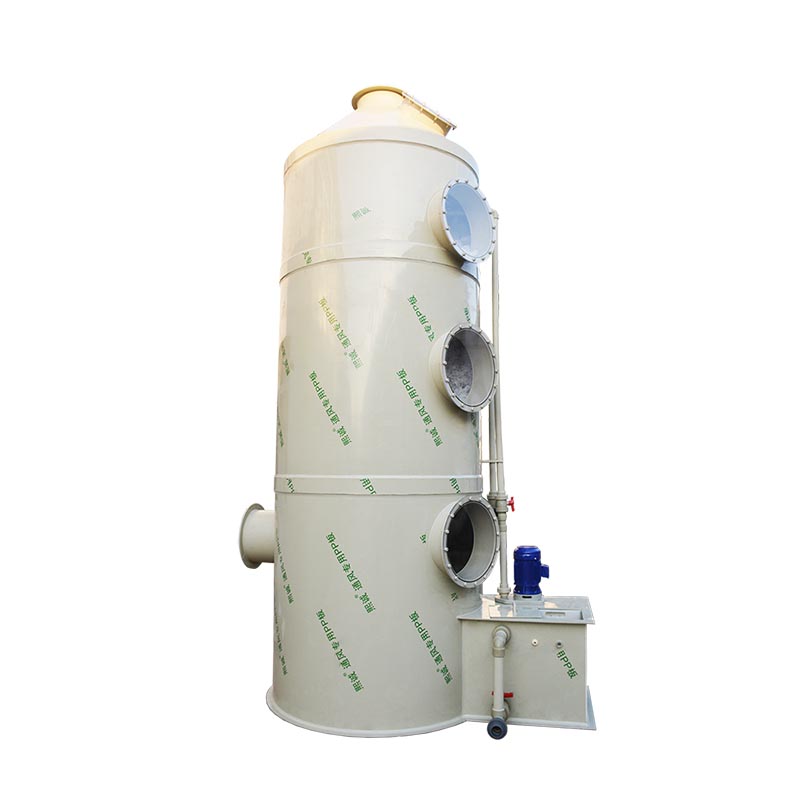 PP polypropylene wet scrubber for air pollution control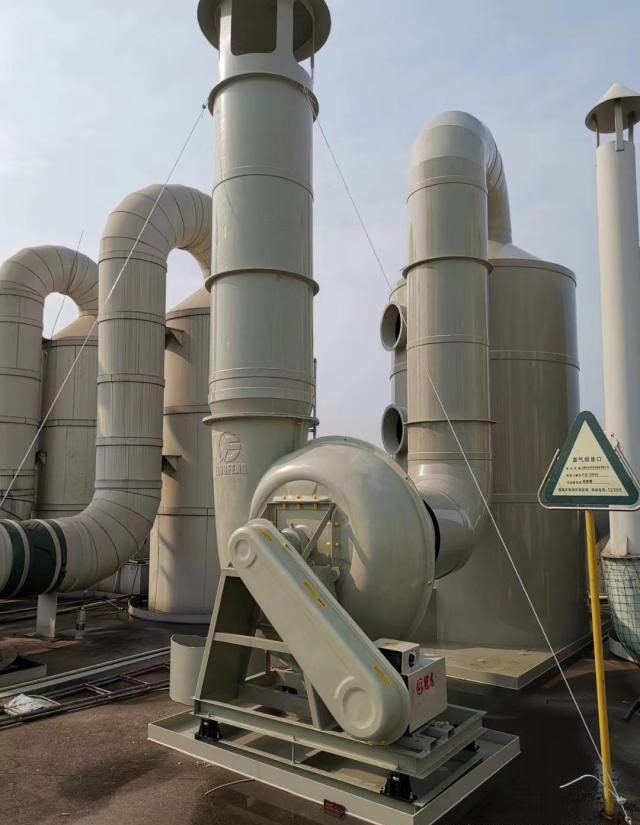
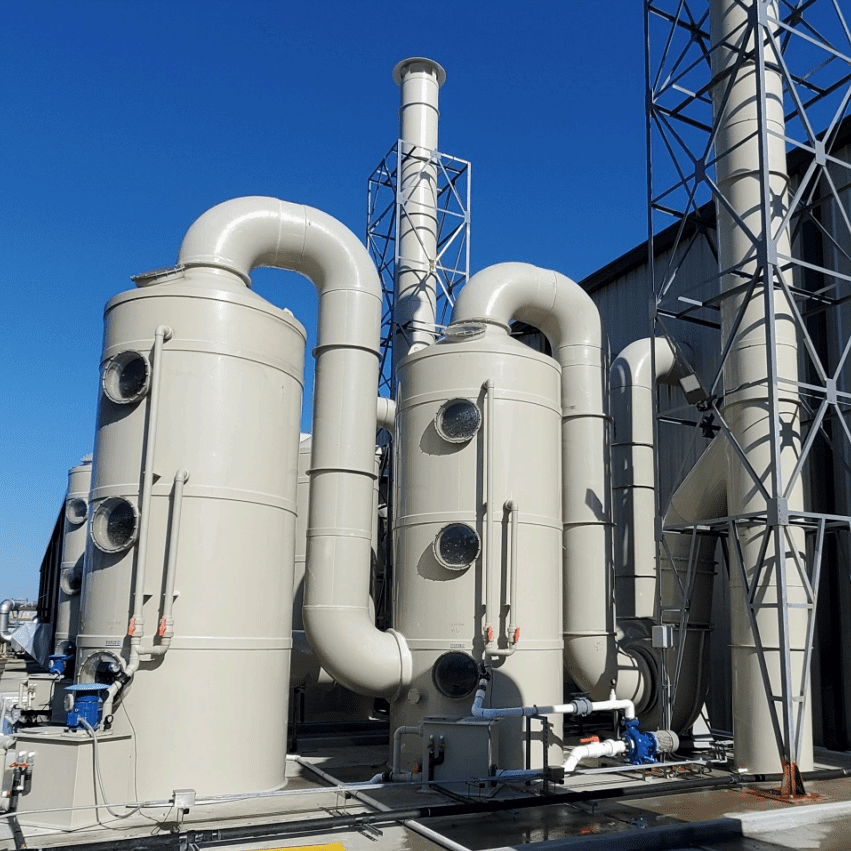 SOx Wet Scrubber System | 98% Multi-Pollutant Removal

